For many people, the phrase “digital sovereignty” still conjures images of doomsday prepping, burner phones, and a general distrust of anything connected to the internet. It sounds ideological, political, or, at the very least, impractical.
But strip away the paranoia and the buzzwords, and digital sovereignty turns out to be something far more ordinary and far more relevant to everyday life.
At its core, digital sovereignty is not about rejecting technology. It’s about understanding which parts of your digital life you actually control, which parts you rent, and which parts you’ve quietly outsourced without ever making a conscious decision.
This article is about reclaiming a bit of that agency in a calm and pragmatic manner, and without the tinfoil hat.
What Digital Sovereignty Actually Means
Digital sovereignty is often framed as an all-or-nothing position: either you’re fully “off grid” or you’ve surrendered entirely to Big Tech. In reality, it’s a spectrum.
At the most practical level, digital sovereignty means having meaningful control over:
• Your data (where it lives, who can access it, and how portable it is)
• Your tools (whether you can change or leave them without major disruption)
• Your workflows (how dependent your thinking, work, and memory are on a single platform)
It does not mean abandoning cloud services entirely. It does not require self-hosting everything. And it certainly doesn’t demand technical martyrdom.
Digital sovereignty is not about purity. It’s about optionality.
Why This Matters More Than Ever
Most of us now live large parts of our lives inside platforms we don’t own and can’t meaningfully influence.
Our notes live in apps that can change pricing overnight.
Our photos sit behind login screens governed by shifting terms of service.
Our documents exist in formats designed to keep us locked in.
Our workflows depend on APIs we don’t control.
None of this is inherently malicious. In fact, many of these tools are excellent.
The issue is not that these services exist, it’s that dependency tends to accumulate invisibly. One small convenience decision at a time.
Digital sovereignty matters because it introduces friction in the right places. It encourages you to ask simple but powerful questions:
- What happens if this service shuts down?
- What happens if the price doubles?
- What happens if I want to leave?
If the honest answer is “I can’t,” you don’t have a system — you have a dependency.
The Myth of “All or Nothing”
One of the biggest blockers to digital sovereignty is the belief that it requires extreme technical effort. Self-hosting everything, running your own servers, ditching mainstream tools entirely.
For most people, that approach is neither necessary nor desirable.
A more realistic model is layered sovereignty.
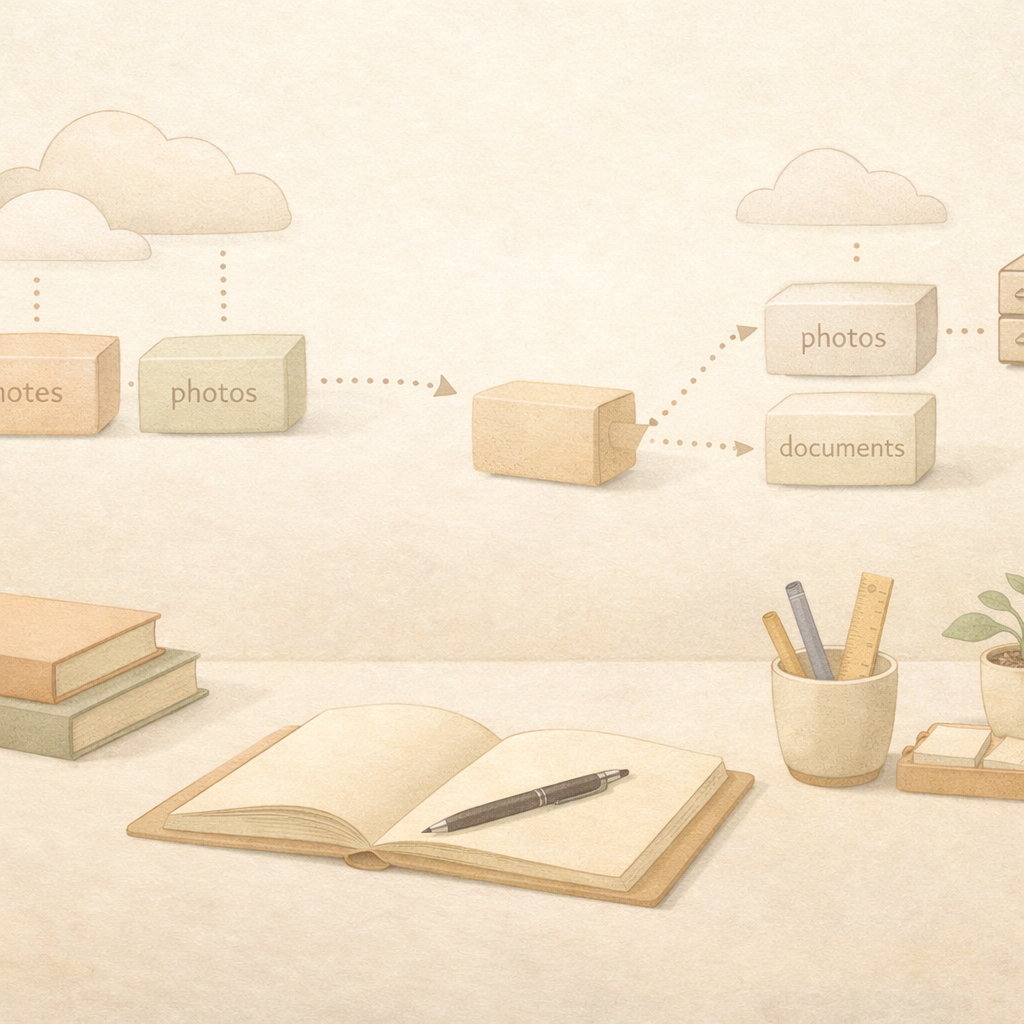
You might keep using mainstream cloud tools for collaboration, speed, and reliability but ensure you have independent copies of your data in open formats.
You might rely on commercial AI tools for productivity while maintaining a personal knowledge base that isn’t trapped inside a proprietary interface.
You might self-host only the things that matter most: documents, photos, family archives, or long-term notes while outsourcing everything else.
Sovereignty is not about rejecting convenience. It’s about avoiding irreversible convenience.
The Quiet Risks We Tend to Ignore
Digital risk is rarely dramatic. It’s slow, subtle, and often invisible until it’s too late.
Account lockouts.
Policy changes.
Service deprecations.
AI tools trained on your content with unclear ownership terms.
Most people assume these risks are either unlikely or unavoidable. In truth, they’re simply unexamined.
Digital sovereignty doesn’t eliminate risk, it makes it legible.
When you know where your data lives, how it’s backed up, and how portable it is, failure becomes an inconvenience rather than a crisis.
That distinction matters.
Where Digital Sovereignty Adds Real Value
The strongest argument for digital sovereignty is not fear — it’s leverage.
Practical benefits include:
• Easier migration between tools
• Reduced switching costs
• Clearer mental models of your digital life
• Less anxiety about long-term access
• Better alignment between tools and values
For knowledge workers, creators, and families building long-term archives, this becomes especially important. Notes, writing, photos, documents, and personal knowledge are not disposable data. They compound in value over time.
Treating them as temporary or platform-dependent is a long-term tax few people consciously choose but many quietly pay.
A Sensible Starting Point
You don’t need a manifesto. You don’t need a server rack.
A sensible starting point for digital sovereignty might look like this:
- Ensure you can export your data in standard formats.
- Maintain independent backups you control.
- Avoid tools that actively prevent migration.
- Prefer systems that separate data from interface.
- Be intentional about where long-term knowledge lives.
That’s it. No ideology required.

Digital sovereignty is not about mistrusting technology. It’s about respecting yourself enough to keep your options open.
And in a digital world that increasingly defaults to lock-in, that quiet optionality may be one of the most valuable assets you can build.